
On 22 July 2026, monitoring was conducted at the groups of Medieval tombs called Olovci (in the Municipality of Kladanj) and Mramor (in the Municipality of Olovo). These necropolises represent highly significant cultural-historical heritage sites; they are designated National Monuments of Bosnia and Herzegovina and are inscribed on the UNESCO World Heritage List.
The Olovci necropolis consists of eighteen stećci (medieval tombstones): twelve gable-roofed stones, five chest-shaped stones, and one pillar-shaped stone. They are arranged in a west-east orientation, with the exception of one gable-roofed stone and two chest-shaped stones, which are oriented north-south. Three of the gable-roofed stones are decorated, and one bears an inscription.
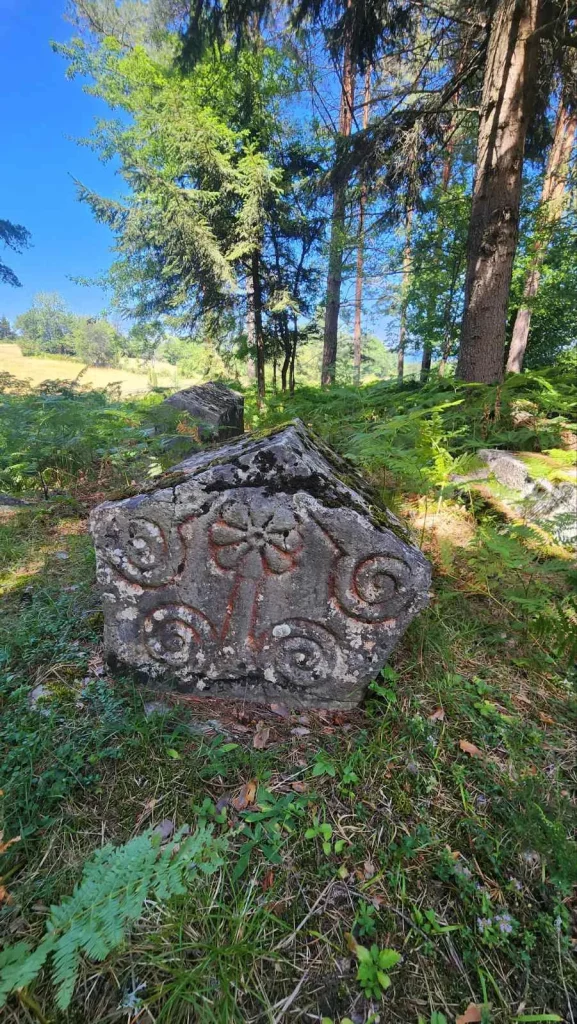
The Mramor necropolis comprises 80 stećci, consisting of 47 gable-roofed stones with bases, 4 chest-shaped stones with bases, 4 chest-shaped stones, 17 slab-shaped stones with bases, and 8 slab-shaped stones. The most common form at the necropolis is the gable-roofed stone with a base, and all were carved from a single block of stone. Fourteen stećci feature decorations, including spiral, rosette, cross, and twisted-ribbon motifs.
Access to both necropolises is via rough gravel roads; both are situated in forested areas, are fenced, and—at the time of monitoring—were overgrown with low to medium-height vegetation. Evidence of tree felling and the dumping of materials directly onto the site was observed at the Mramor necropolis.
The aim of the monitoring was to assess the current condition of the necropolises and identify any potential risks. The monitoring was conducted by Azra Tunović, an expert advisor for archaeological and architectural heritage at the Institute for the Monuments’ Protection.
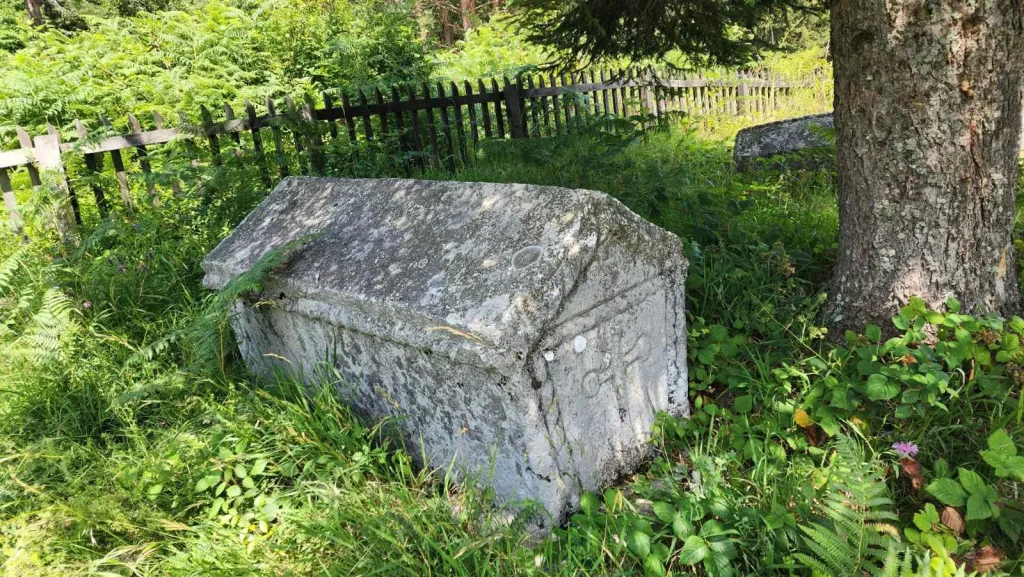
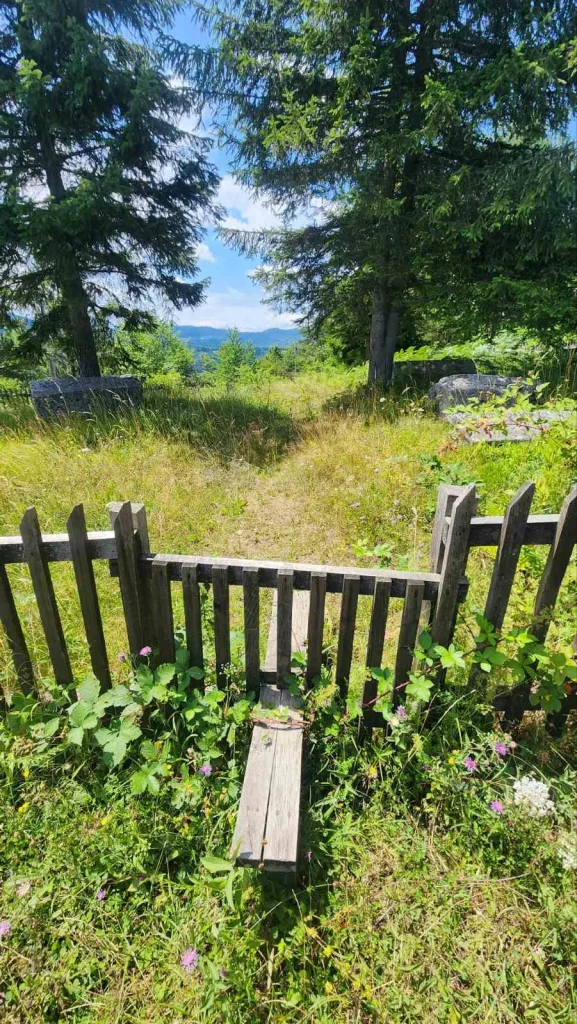
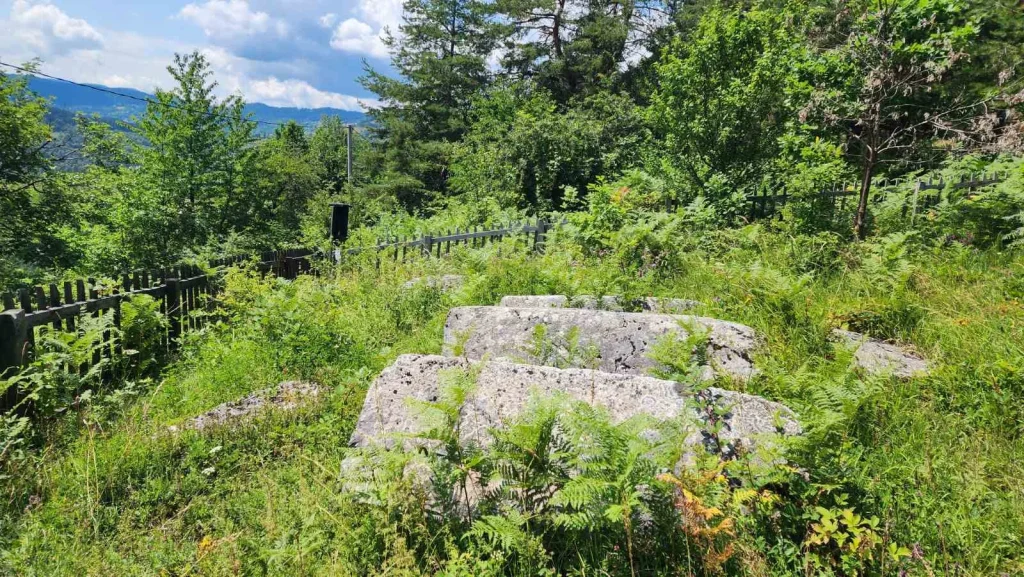
Olovci

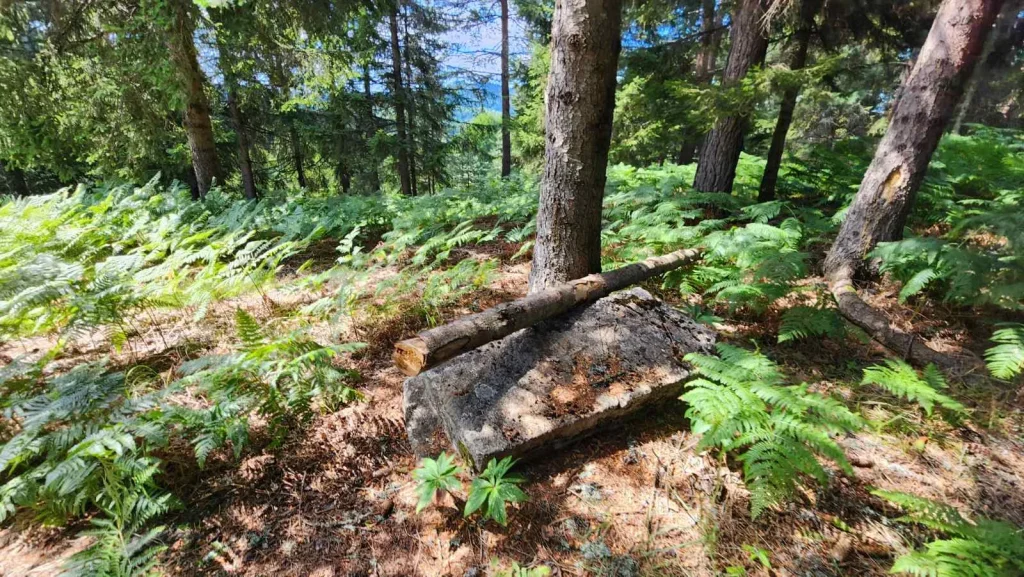
Mramor