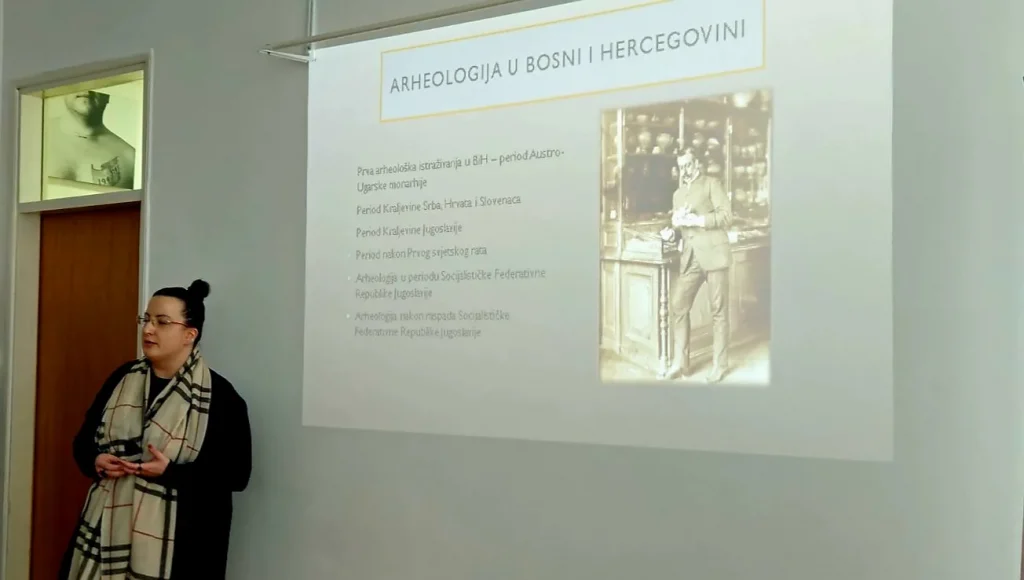
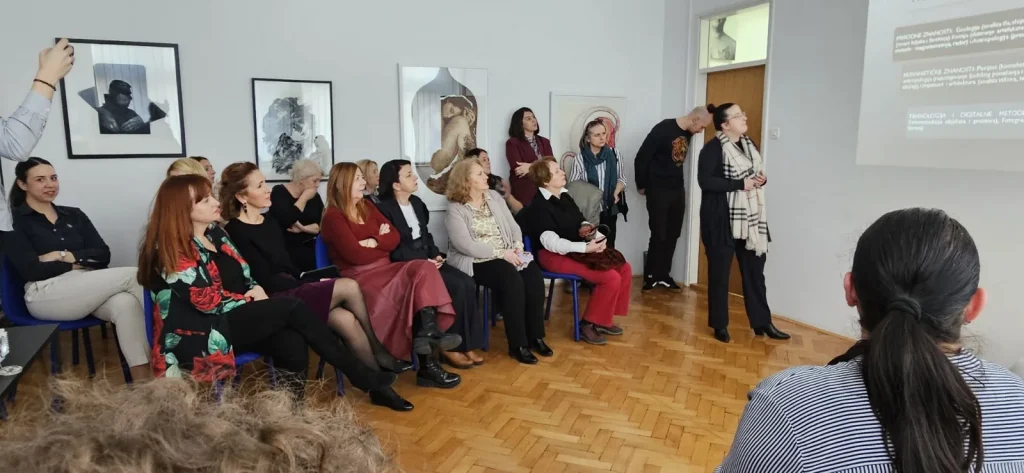
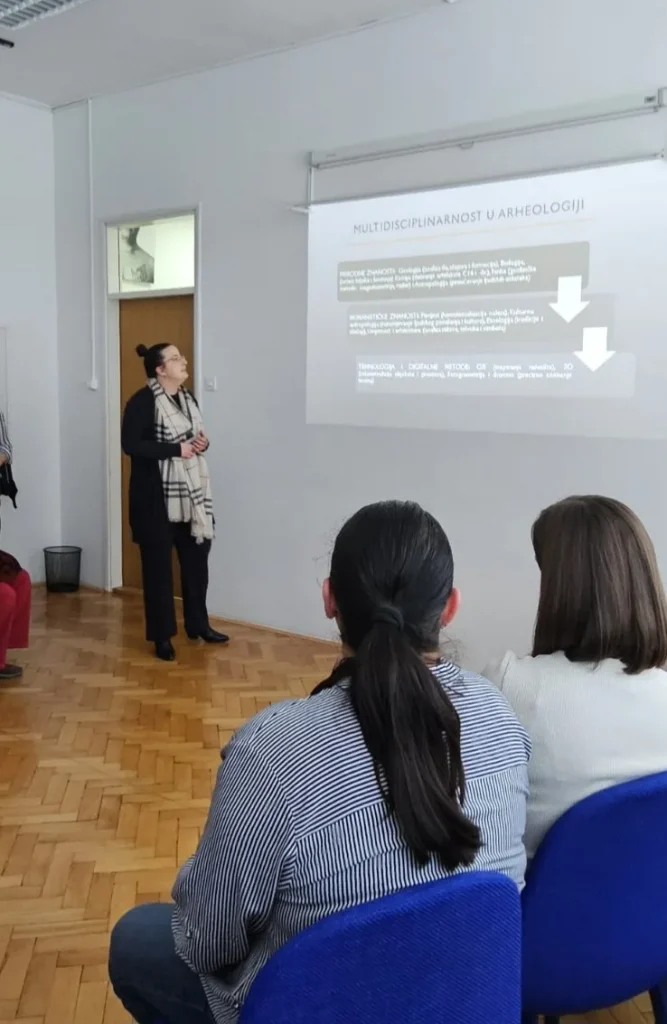
The lecture “The Role of Archaeology in the Institute for the Protection of Monuments” offered a comprehensive insight into the importance of archaeology as a scientific discipline and its pronounced multidisciplinarity. Archaeology was presented as a science which, through collaboration with numerous other disciplines, contributes to the understanding and preservation of cultural and historical heritage. This served as an introduction to this year’s European Heritage Days 2026 theme Heritage at Risk: Revive, Resist, Reimagine.
It was emphasized that archaeology, through its work, actively participates in processes of restoration, protection, and reinterpretation of cultural heritage. Special attention was given to the richness of archaeological sites across Bosnia and Herzegovina, ranging from the Paleolithic to the Ottoman period, highlighting the layered nature and continuity of cultural development in these regions.
The lecture also presented the most significant researchers, with particular emphasis on the work of Vejsil Ćurčić, the first formally trained Bosnian-Herzegovinian archaeologist, whose contributions greatly advanced the development of archaeology in Bosnia and Herzegovina.
A brief overview of the activities of the Institute for the Protection of Monuments was included, along with an outline of archaeological research methodologies. The importance of archaeology in the work of the Institute of the Federal Ministry of Culture and Sports was especially underlined, with the aim of systematic protection, research, and preservation of cultural and historical heritage.
In conclusion, the role of archaeologists was highlighted as crucial in identifying threats to cultural heritage, particularly in the context of urbanization, infrastructural interventions, and climate change.
The lecture was delivered by Martina Marinčić, M.A. in Archaeology and Art History, an employee of the Federal Ministry of Culture and Sports. of the Federal Ministry of Culture and Sports.