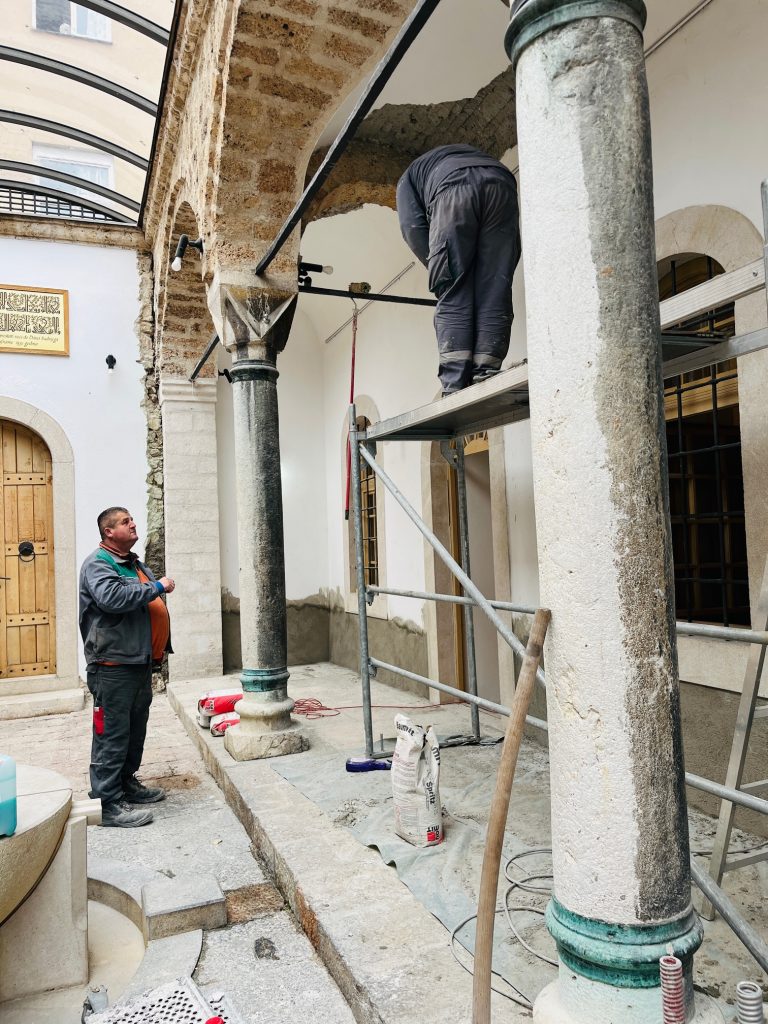
On the basis of the expert opinion of the Institute for the Protection of Monuments, ongoing maintenance work began on the building of Gazi Husrev-beg’s hanikah in Sarajevo. The work is performed by the company “NEIMARI” d.o.o. Sarajevo.
The building complex – Gazi Husrev-beg’s madrasa with the site and remains of the hanikah in Sarajevo was declared a national monument of Bosnia and Herzegovina by the Decision of the Commission for the Preservation of National Monuments of Bosnia and Herzegovina, adopted at the session held from September 4 to 11, 2006. Protection measures established by the Law on the Implementation of Decisions of the Commission for the Protection of National Monuments, established in accordance with Annex 8 of the General Framework Agreement for Peace in Bosnia and Herzegovina, are applied to the national monument.
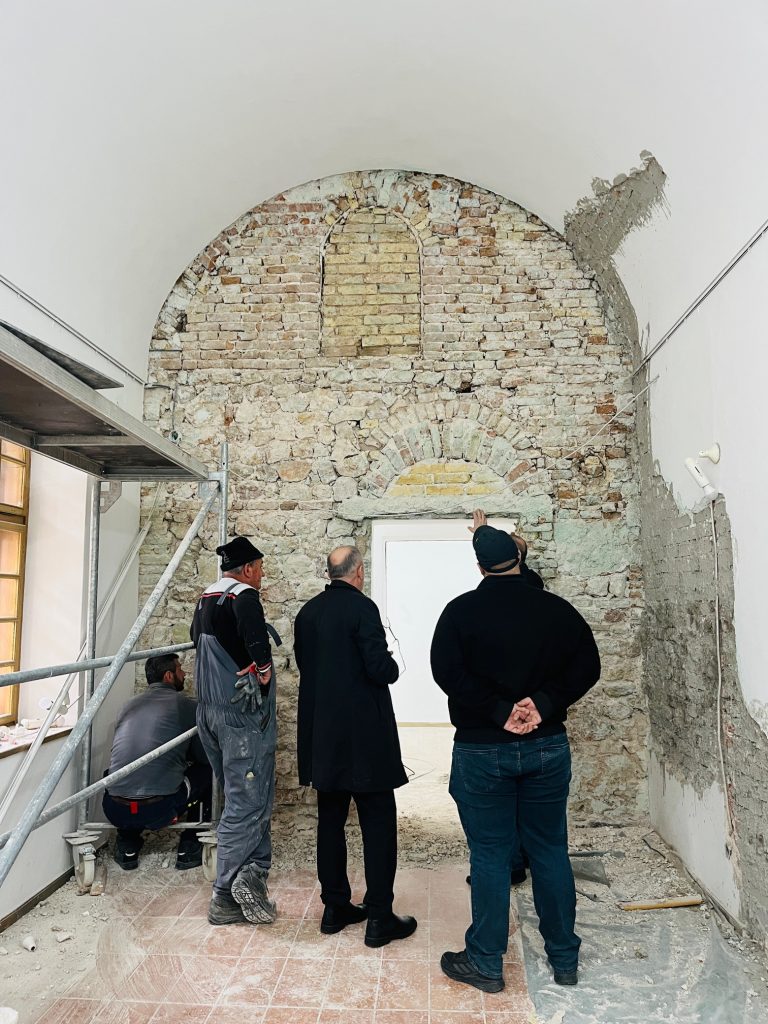
The first expert conservation inspection was carried out on March 27, 2026 in the presence of: Amir Sakić, director of the Museum of Islamic Culture and Art, Abdulah Alagić, representative of Rijaset of the Islamic Community in BiH, Madžid Šljivić, representative of the Gazi Husref Bey Foundation and Ensar Mulaomerović, representative of the contractor “NEIMARI” d.o.o. Sarajevo.
After the inspection, it was determined that the works are being carried out in accordance with the project documentation “Elaborate on ongoing maintenance of the Gazi Husrev-beg hanikah facility” and according to the defined dynamics.
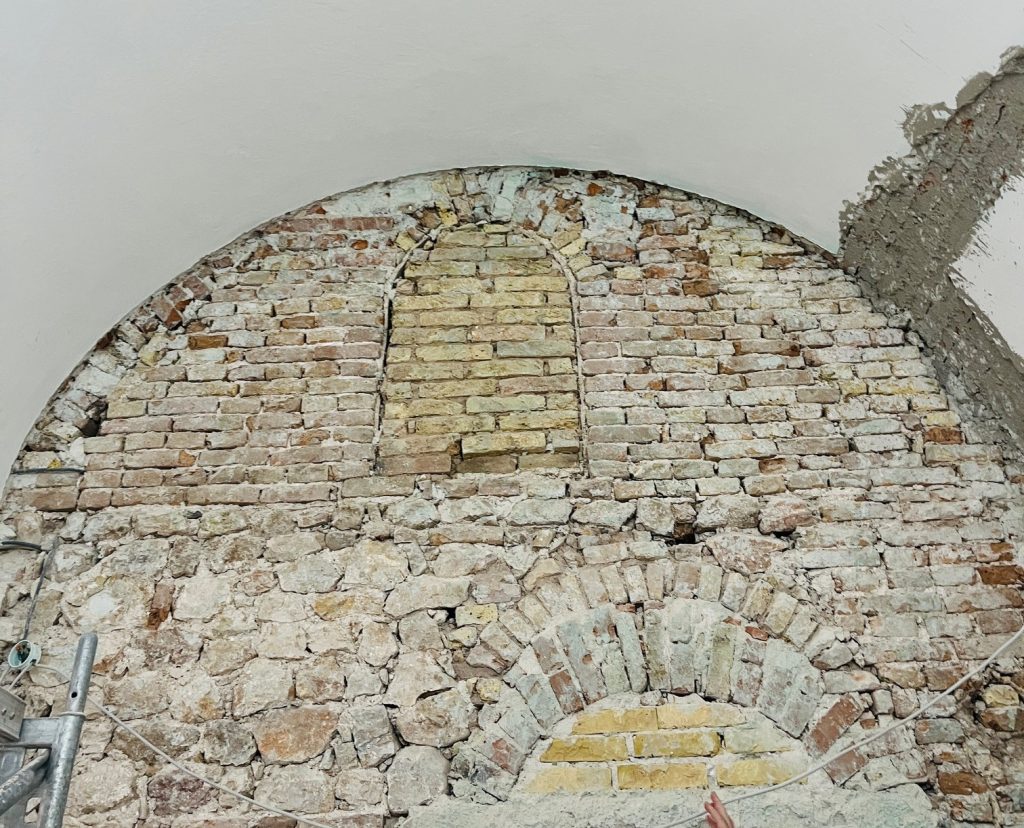
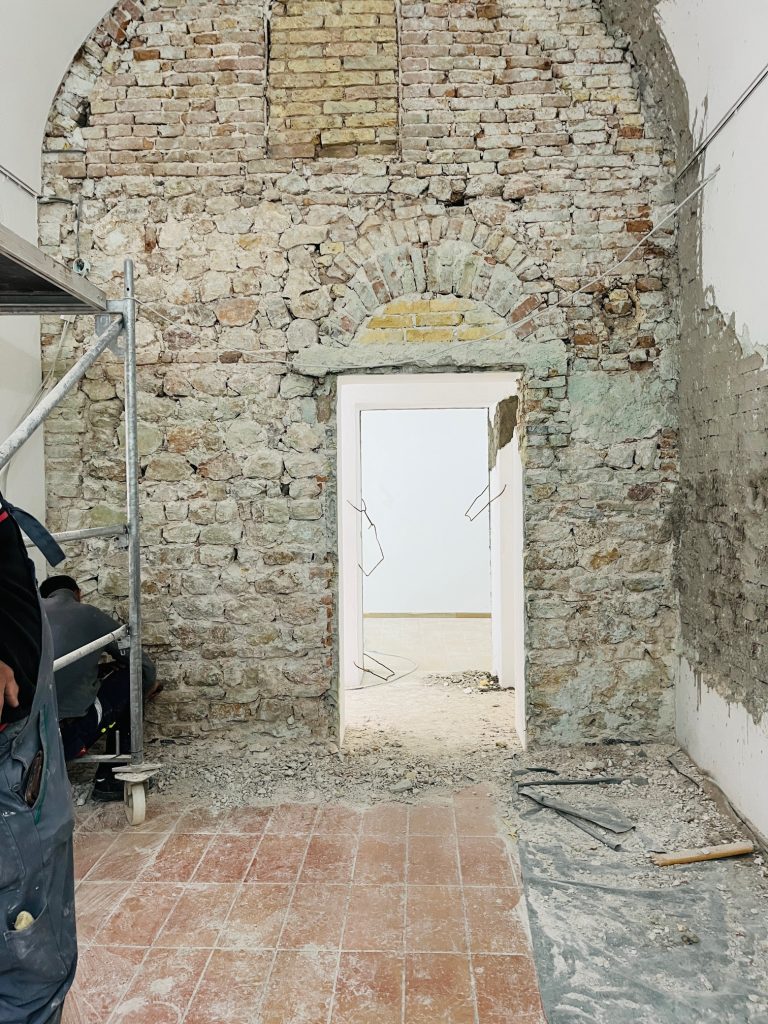
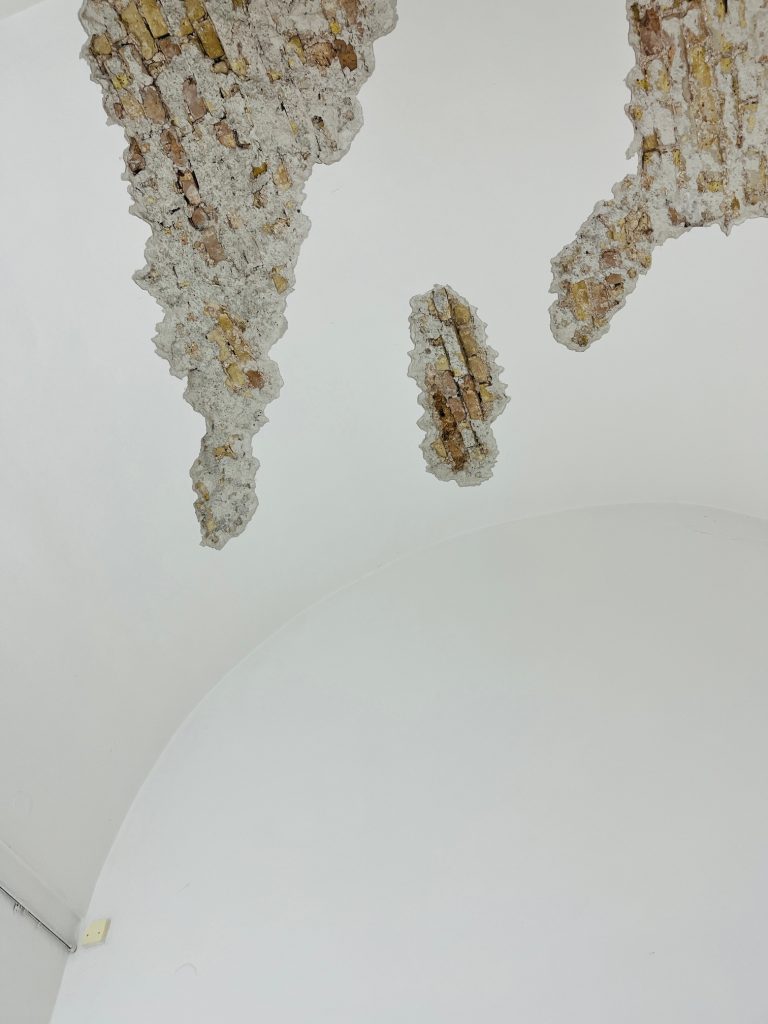
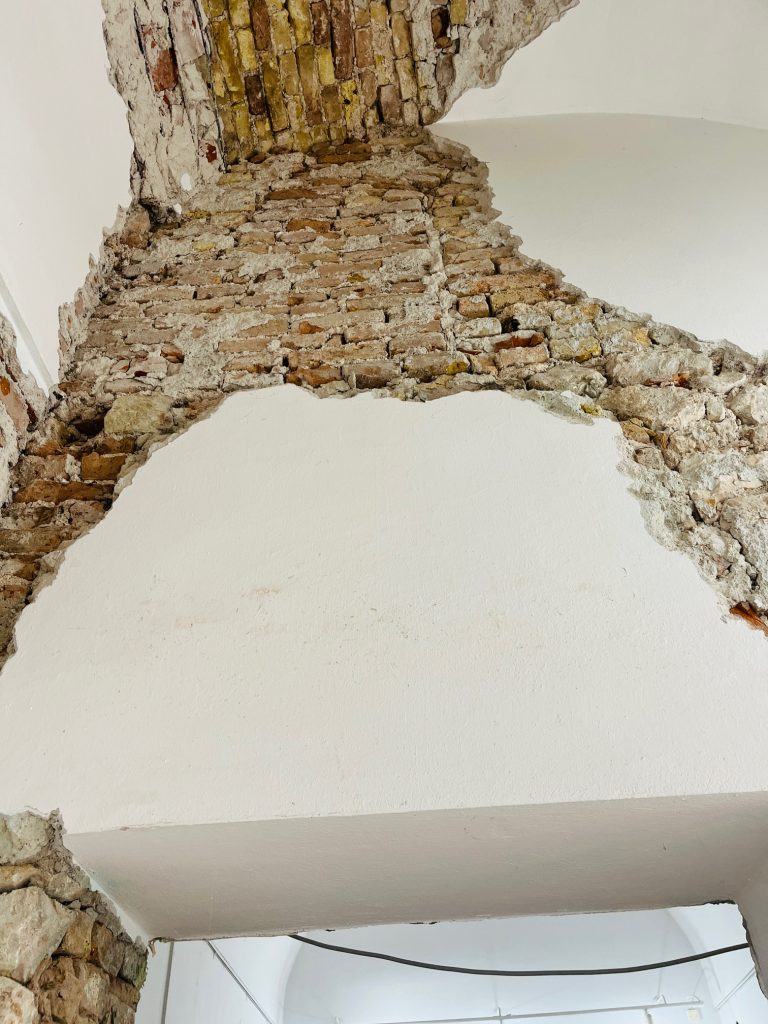
The inner door, which is not original, was removed for the processing of the slats and preparation for the installation of the masks. All unstable parts of the mortar are removed, in some places up to the brick and stone. After removing the existing plaster on one of the transverse walls, it was proposed that the exposed wall (combination of brick and stone) be kept exposed for presentation purposes. It is a wall of the preserved original part of the building, on the northern side. It was agreed that the wall should be cleaned, removed and washed out of all joints made of decayed plaster and prepared for re-grouting with lime-based mortar. Work is also carried out on the outer walls, from the yard, in the lower zones where moisture has appeared.
The works carried out in order to adapt the space for the museum display are carried out without disturbing the original shape and elements of the object.