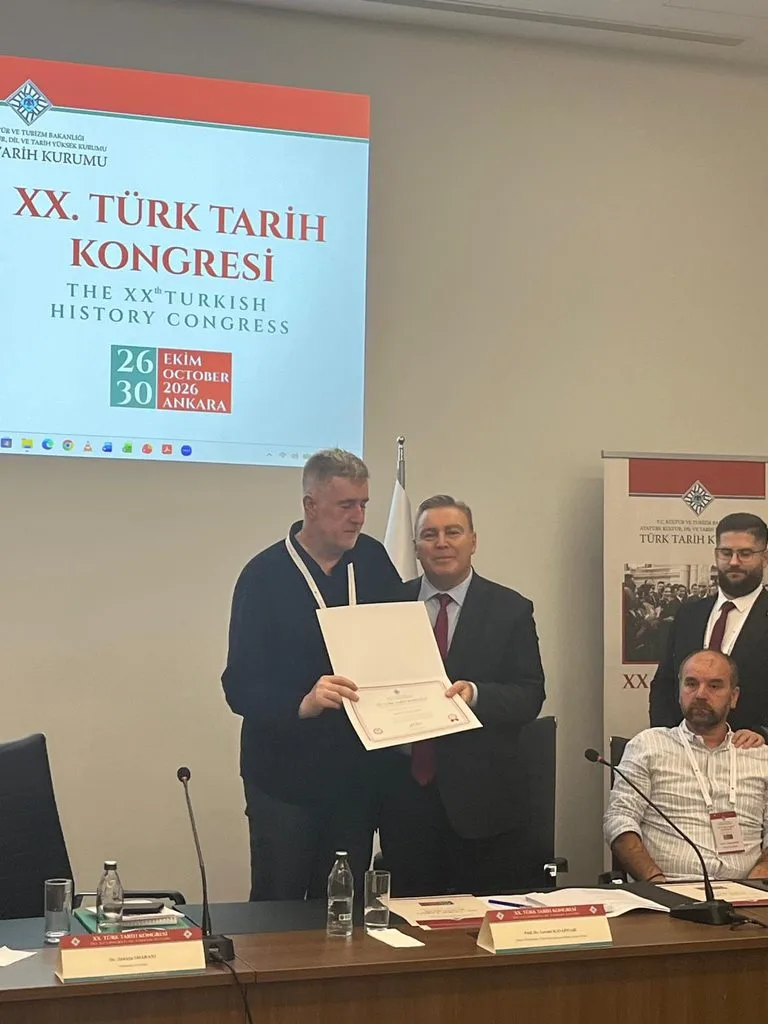
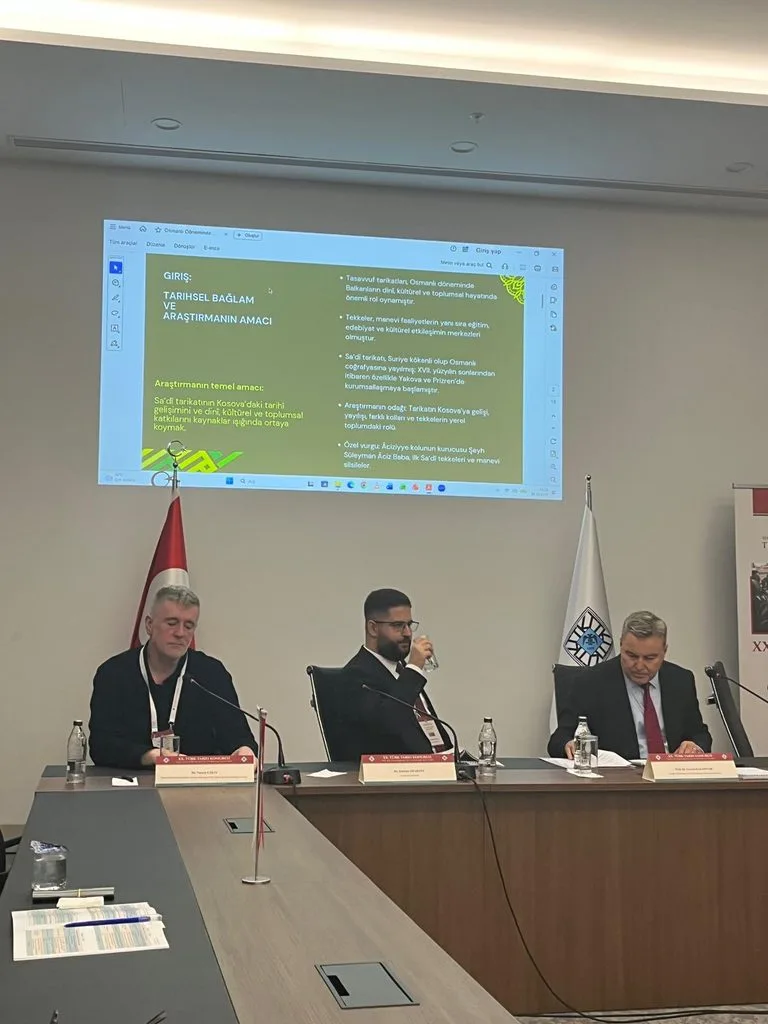
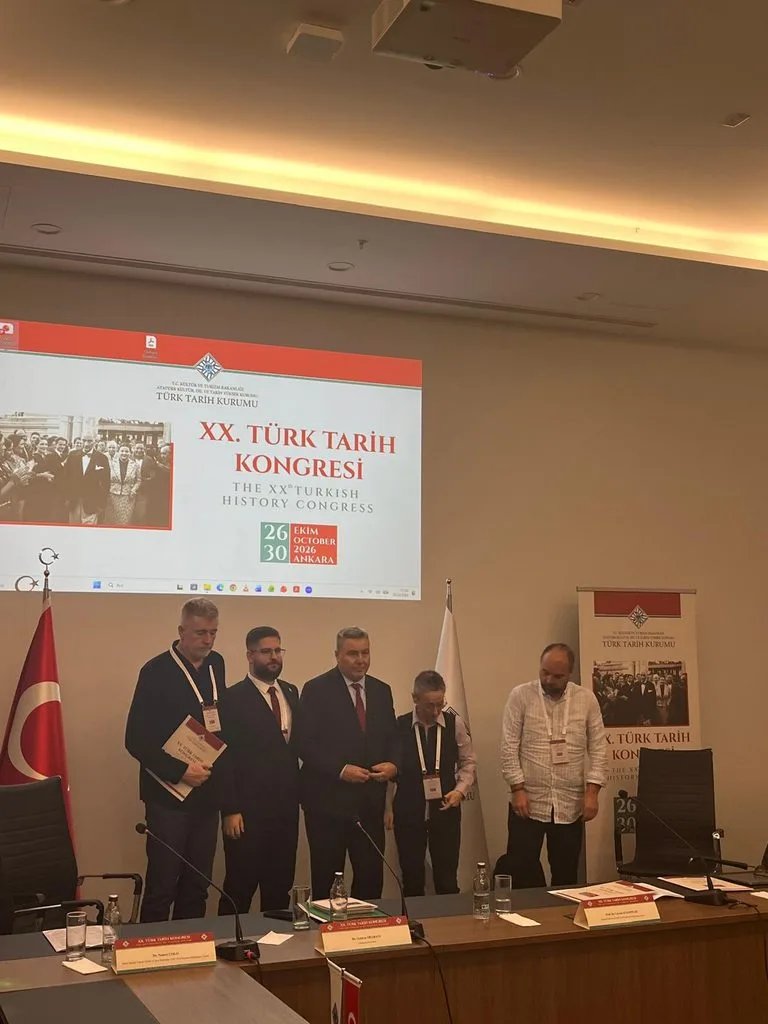
The 20th Congress of Turkish History was held in Ankara from 26 to 30 October 2026, bringing together approximately 370 scholars from more than 37 countries. Among the participants was Nusret Čolo, Adviser for Cultural Heritage in the Sector for Cultural and Historical Heritage and Scientific Research of the Federal Ministry of Culture and Sports.
During the five-day congress, current research in the fields of Turkish history and historiography was presented, covering Ottoman history, the history of Atatürk and the Republic of Türkiye, the history of the Turkic peoples of Central Asia, as well as world history. Addressing participants at the closing session, Prof. Dr. Derya Örs, President of the Atatürk Supreme Council for Culture, Language and History, emphasized that the importance of the 20th Congress of Turkish History lies not only in the number of papers presented and sessions held, but above all in its contribution to the development of scholarly thought. On that occasion, he stated: “The true value of this congress lies not only in the diversity of topics it addresses, but also in its ability to raise new questions, to reassess established facts in the light of new sources, and to make different approaches the subject of scholarly discussion.”
Prof. Örs particularly highlighted the breadth of topics covered, ranging from the earliest periods of Anatolian history to the Ottoman and Republican eras, as well as the opportunities that artificial intelligence and digital methods open up for contemporary historical research. Referring to the fact that the 20th Congress of Turkish History coincided with the 103rd anniversary of the Republic of Türkiye, he underscored the symbolic significance of this timing while also expressing his satisfaction with the participation of young researchers. Speaking about the methodological principles of historical scholarship, he stressed the importance of research based on historical sources and documents, concluding: “History is credible when it speaks through documents, and enduring when subjected to documentary verification.”
At the Congress, Nusret Čolo delivered a scholarly presentation entitled “The Waqfiyya and Endowments of the Bosnian Atik Ali Pasha from 915/1509”, focusing on Atik Ali Pasha, a distinguished Ottoman statesman from the reign of Sultan Bayezid II who originated from Sarajevo. After entering the Ottoman state system through the devshirme institution, Atik Ali Pasha, also known by the epithet Hadım (the Eunuch), received his education in the Enderun Palace School. During his career, he served as Chief Agha of the Imperial Palace, was subsequently appointed Beylerbey of Karaman, and later attained the position of Grand Vizier.
The central focus of the presentation was his waqfiyya (endowment deed) dating from 915/1509, the original manuscript of which is preserved in the Süleymaniye Library in Istanbul. This exceptionally important historical document is the only known source providing comprehensive and detailed information on his charitable endowments. Particular attention was devoted to the waqf institutions established by Atik Ali Pasha, the revenues designated for their maintenance, and the organization and continuity of the charitable services they supported. The analysis of the document made it possible to assess the scope of his endowment activities, the management of his foundations, and their social role within Ottoman society.
The scholarly significance of the presentation is further reflected in the fact that this Arabic-language waqfiyya was presented to the international academic community for the first time, generating considerable interest and positive reactions among Congress participants. Its presentation underscored the importance of original archival material for new historiographical research, particularly in advancing knowledge about one of the most prominent Ottoman statesmen of Bosnian origin, as well as his legacy as a benefactor and builder. At the same time, attention was drawn to the value of the historical and cultural heritage of Bosnia and Herzegovina and to the contributions made by individuals of Bosnian origin to the broader historical and civilizational developments of the Ottoman period.