Description (preparation, material and symbolic elements)
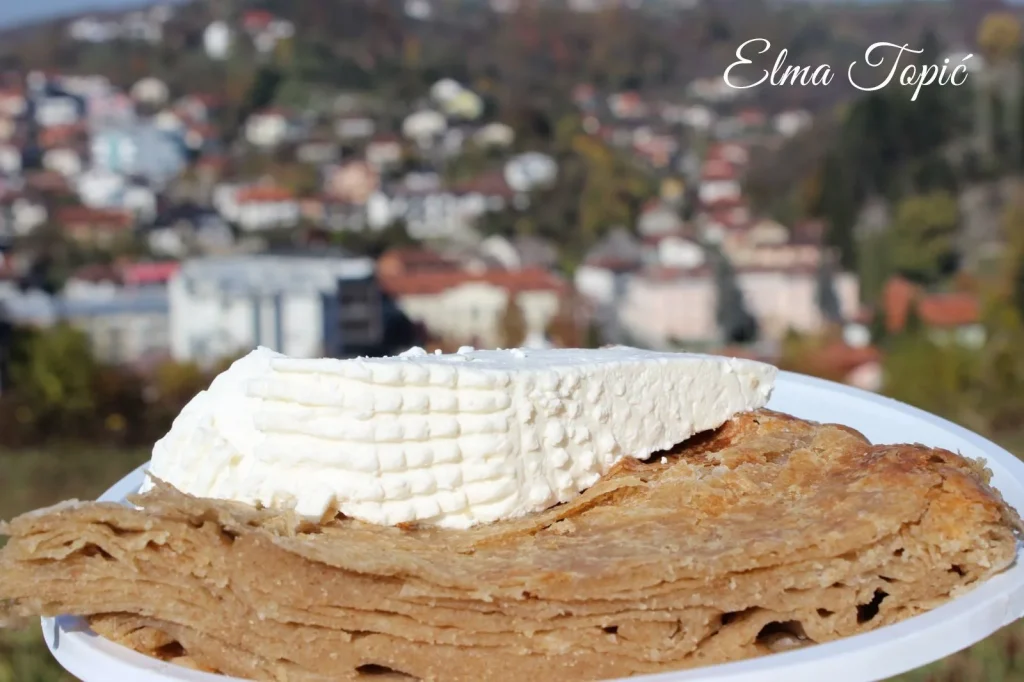
Krajina masnica is a traditional dish prepared exclusively from domestic, organic ingredients: wheat flour, water, salt, oil and homemade butter. The process begins with milling the flour in a mill and sifting it to achieve smoothness, which enables a fine dough texture.
Throughout the entire process, precision, temperature control and the dough resting time are emphasised. These technical elements require experience and skill, often primarily demonstrated through practices that are cultivated in families and communities over generations, passed down from one generation to the next.
Location and associated tradition – Western Krajina (Una-Sana Canton), Bosnian Krajina
Krajina masnica forms part of the broader cultural heritage of Bosnia and Herzegovina, encompassing a rich tradition of multi-ethnicity and the shared identity of numerous peoples and communities in the country. The role of the family and communities in preparing masnica reflects a collective approach to food preparation as the basis of social life. Masnica is perceived as a symbol of togetherness, tradition and continuity within local communities, and its preparation is often associated with special occasions such as births, weddings, religious and national holidays, and annual celebrations, which in Bosnia and Herzegovina are often multi-ethnic festivals and gatherings.
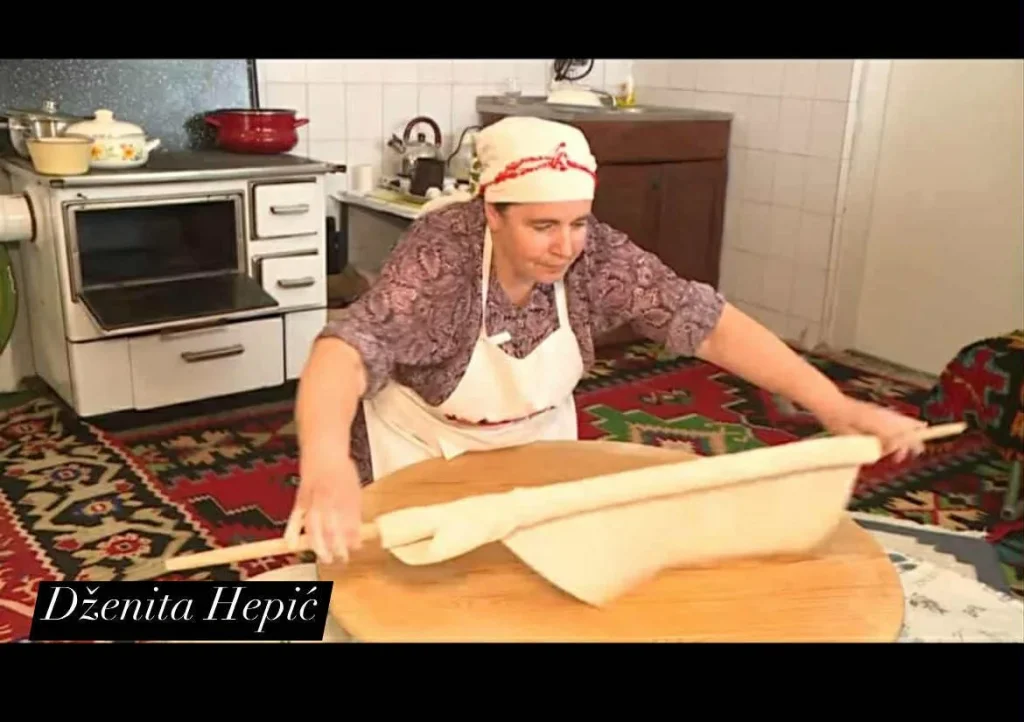
Material and technological elements
- Material elements: wheat flour, water, salt, oil, homemade butter;
- Techniques and processes: milling and sifting flour to achieve smoothness; kneading the dough for the jufka pastry sheets; resting (otpusti); rolling out the jufka; brushing with a mixture of oil and butter; flattening and shaping; layering and baking until golden brown;
- Textures and sensory qualities: a distinctive light, buttery texture with pronounced layers and rich aromas of baked butter;
- Language and dialect: the use of local expressions and terms associated with recipes and processes, preserving the dynamics of dialect, the tradition and identity of Bosnian-Herzegovinian culture and the Bosnian language;