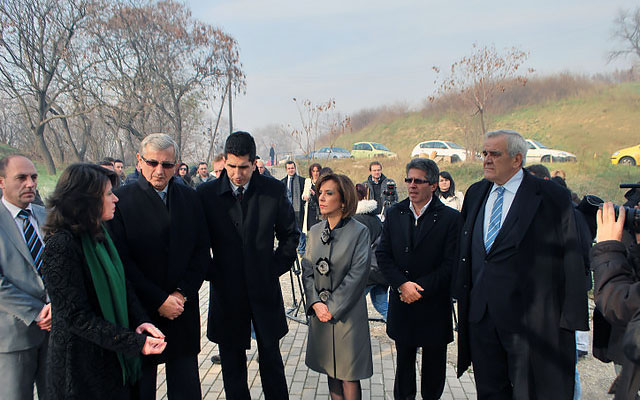
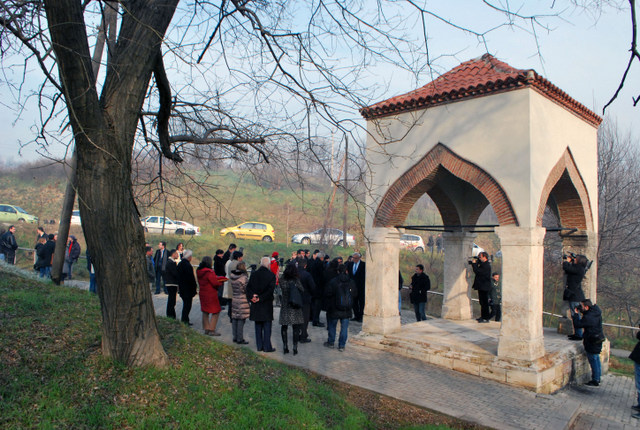
Federal Minister of Culture and Sport, Salmir Kaplan, attended a ceremony in Skopje yesterday marking the restoration of the turbe of the last Bosnian princess, Katarina Tomašević Kotromanić, who was buried near Skopje.
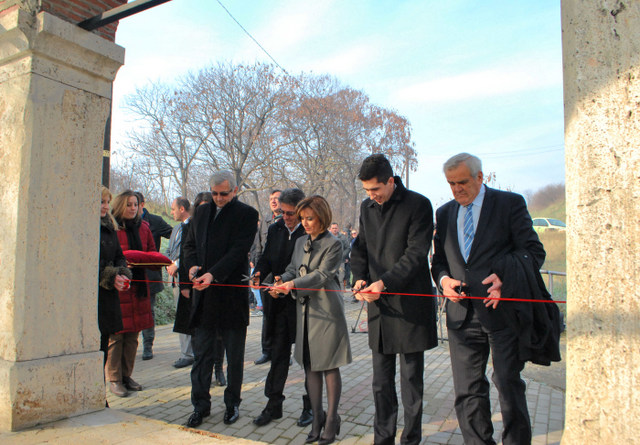
Following the meeting, Minister Kaplan and Macedonian Minister of Culture Elizabeta Kančeska-Milevska symbolically cut the ribbon at the ceremony marking the opening of the restored turbe.
On the occasion, Kaplan recalled that the two countries had been cooperating on the implementation of this project since 2011, emphasising that BiH and Macedonia have excellent cultural ties.
"We must continue strengthening mutual relations in all fields. We expect our cooperation to continue in the future as well," Kaplan said.
Kančeska-Milevska pointed out that the two countries have very good relations in the field of culture, recalling that the turbe of the last Bosnian princess had been restored through cooperation between the ministries of Macedonia and Bosnia and Herzegovina.
She noted that the restoration works had been carried out with great precision and care in order to preserve this important cultural heritage, as she emphasised.
The ceremony was attended by the Ambassador of BiH to Skopje, Zdravko Begović.
The restoration of the turbe cost 30,000 euros, of which the Ministry of Culture of Macedonia provided 20,000 euros and the FBiH Federal Ministry of Culture and Sport provided 10,000 euros.
During the restoration, the original parts were used to restore one pillar, while the remaining three were rebuilt.
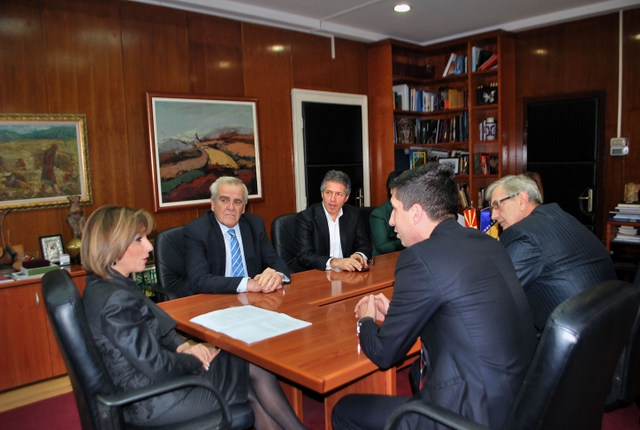
The Federal Ministry of Culture and Sport became involved in the restoration project in 2011, during a visit by a BiH delegation to the Republic of Macedonia.
The delegation was led by the then member of the Collegium of the House of Peoples of the Parliamentary Assembly of BiH, Sulejman Tihić, who also launched the initiative to restore the turbe on that occasion.
Princess Katarina’s monument was destroyed in 1963, when Skopje was struck by a devastating earthquake.
It is presumed that the monument was built at the end of the 15th or the beginning of the 16th century, during Ottoman rule.
It is believed that Princess Katarina, the daughter of Bosnian Queen Katarina Kosača and King Stjepan Tomaš Kotromanić, lived and died in Skopje, where she was cared for by Isa-beg Ishaković.
Her father was executed by the Ottomans during the conquest of Bosnia, while her mother, Queen Katarina Kosača, fled to Rome, where she also died.
The princess had a brother, Sigismund, who allegedly converted to Islam, as she did, and with whom she is believed to have been sent to Istanbul.
The Federal Ministry of Culture and Sport thanks all individuals and institutions from Bosnia and Herzegovina and Macedonia who contributed to the implementation of the turbe restoration project.


